Qwen 2.5 vs 3.5: Architecture, Benchmarks, and When to Upgrade

By Alex Morgan
MyClaw Editorial
MyClaw
Run Best-in-Class AI Agents Now
Run OpenClaw or Hermes Agent on managed MyClaw hosting, so your AI agent stays online, updated, and ready for real work.
AI Takeaway
- What does qwen 2.5 vs 3.5 mean right now? The open Qwen2.5 dense text LLM family versus the newer Qwen3.5 native multimodal and agent-oriented line—not Qwen-Image generation SKUs.
- What is the biggest product jump? Dense Instruct (Qwen party blog, Sep 19, 2024) versus hybrid MoE-style native vision-language models with thinking on by default (Alibaba Cloud Community, Feb 17, 2026).
- Which official scores should you read first? Exact cards only—for example Qwen2.5-72B-Instruct MATH 83.1 and HumanEval 86.6 (Qwen2.5-LLM Instruct table), and Qwen3.5-397B-A17B MMLU-Pro 87.8, GPQA 88.4, and SWE-bench Verified 76.4 (Alibaba, Feb 17, 2026).
- When should you stay on Qwen2.5? Stable text-only pipelines, working fine-tunes or tool templates, or runtimes that do not yet support the Qwen3.5 stack.
- Where does MyClaw fit? MyClaw hosts always-on OpenClaw/Hermes agents for scheduled research digests, repo watchers, and ops hygiene on the models you already use.
Qwen 2.5 vs 3.5 at a Glance
Qwen 2.5 vs 3.5 is a generation and architecture question. Qwen2.5 is a dense decoder-only text LLM line with separate Coder, Math, and VL siblings. Qwen3.5 ships as native vision-language foundations around a hybrid Gated DeltaNet plus sparse MoE design, with the open flagship at 397B total and 17B active. Treat Qwen2.5-VL as a sibling of the left column. If you landed here for image generation SKUs, read Qwen Image 2.0 vs 3.0 instead—this article stays on chat, code, and agent weights.
| Dimension | Qwen2.5 | Qwen3.5 |
|---|---|---|
| Product shape | Dense text LLMs (+ Coder/Math/VL siblings) | Native VL; hybrid Gated DeltaNet + sparse MoE (397B-A17B) |
| Open sizes | 0.5B–72B (party blog, Sep 19, 2024) | Flagship 397B-A17B; smaller HF cards (e.g. 4B, 9B) |
| Context | Up to 128K (party / Qwen2.5-LLM blogs) | 262,144 on HF cards (2026 line) |
| Languages | Over 29 (party blog, Sep 19, 2024) | 201 languages/dialects (Alibaba, Feb 17, 2026) |
| Thinking UX | Standard Instruct chat | Thinking on by default on HF; disable via flags |
| License note | Apache 2.0 except 3B and 72B (party blog) | Check each open card (many list Apache 2.0) |
Qwen2.5-72B-Instruct on the Qwen2.5-LLM blog table reports MMLU-Pro 71.1, MATH 83.1, and HumanEval 86.6. Alibaba’s Feb 17, 2026 Qwen3.5 post lists Qwen3.5-397B-A17B at MMLU-Pro 87.8, GPQA 88.4, SWE-bench Verified 76.4. Those are labeled vendor figures on different cards—not a matched bake-off on your prompts.
What Qwen2.5 Still Does Well
Qwen2.5 fits when the workload is text-first and the stack is settled. The party blog (Sep 19, 2024) describes dense sizes from 0.5B through 72B, pretraining up to about 18 trillion tokens, context up to 128K with generation up to 8K, and multilingual support for over 29 languages. Most open sizes are Apache 2.0, with exceptions called out for the 3B and 72B variants on that blog—so license checks still matter before you ship.
Those Instruct scores explain why teams keep 2.5 in production: math and coding on the 72B-Instruct card stay competitive for a dense open model of that era, and vLLM, Ollama, Transformers, and common quant packs are mature. If you already fine-tuned a mid-size Instruct checkpoint or locked JSON schemas against Qwen2.5 stop sequences, migrating just because 3.5 exists is optional—not free quality. Keep 2.5 as the A/B control and introduce a Qwen3.5 card only as the challenger.
What Qwen3.5 Changes
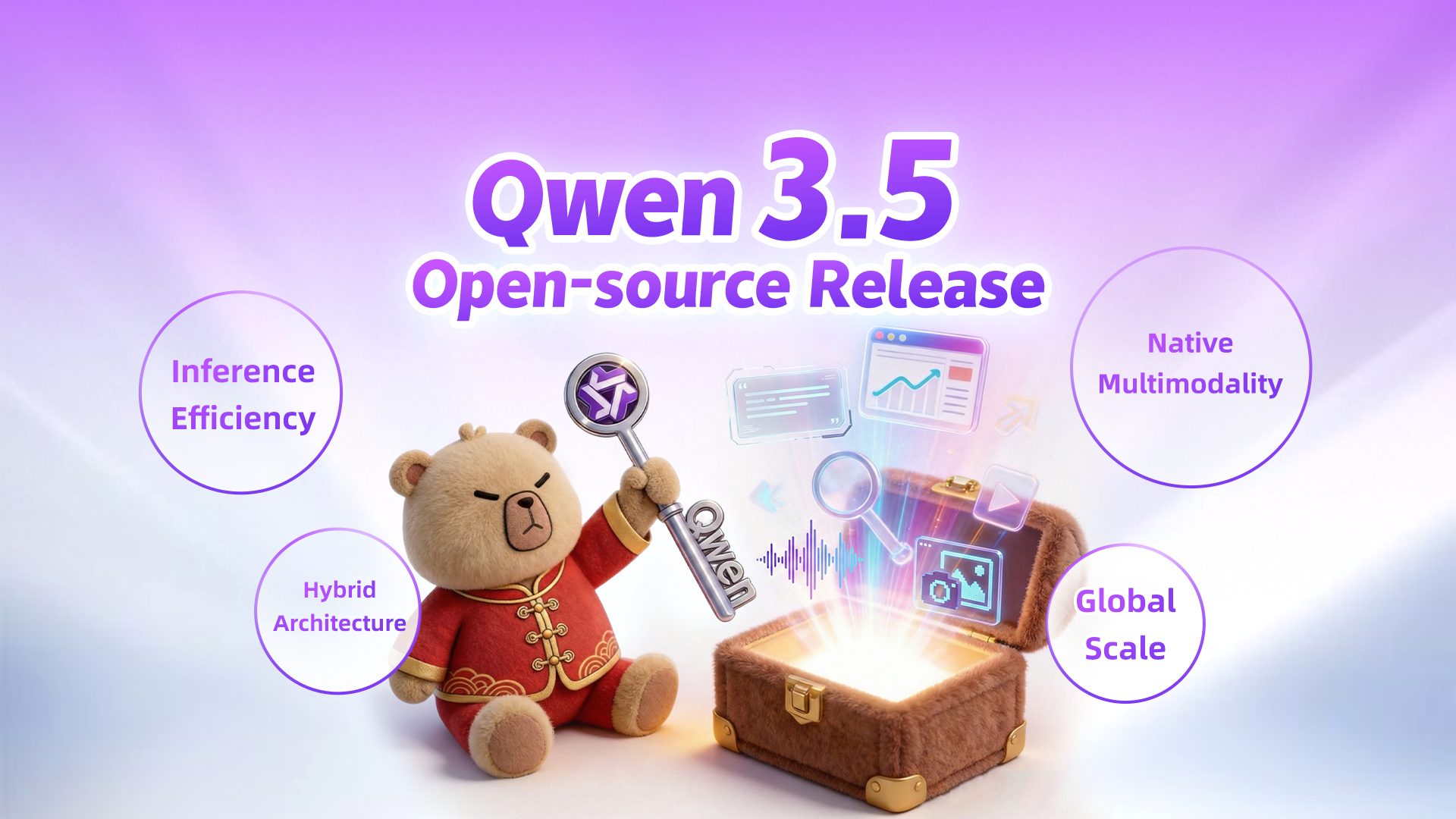
Qwen3.5 is not a quiet Instruct refresh. Alibaba’s Feb 17, 2026 post frames the line as native multimodal agents: early-fusion vision-language training, a hybrid Gated DeltaNet plus sparse MoE backbone, and reinforcement learning aimed at tool use and long-horizon tasks. The open flagship Qwen3.5-397B-A17B activates 17B parameters out of 397B total. Language coverage jumps to 201 languages and dialects, and Hugging Face cards list a native context of 262,144 tokens.
Thinking mode is on by default on the reviewed HF cards. That helps hard reasoning and multi-step tool plans, but it also changes latency, log shape, and how you separate chain-of-thought from the final answer—revalidate structured outputs, function-call wrappers, and stop sequences in the first week you promote any 3.5 weight. The flagship’s MMLU-Pro 87.8, GPQA 88.4, and SWE-bench Verified 76.4 set a high ceiling; the Qwen3.5-9B HF card lists MMLU-Pro 82.5 and IFEval 91.5 with the same 262,144 native context—so pick the exact repo ID, not just the “3.5” label.
If you are weighing Qwen3.5 against closed frontiers, Gemini 4 vs Qwen 3.5 covers that framing. If you are looking past 3.5 at the next family fork, Qwen 3.8 vs Qwen 3.5 covers that step; this post stops at the 2.5→3.5 path.
When to Upgrade—and When to Stay
Upgrade when the new capabilities map to real work: native multimodal inputs in the same chat loop, longer native context, stronger agent and software-engineering benches on the flagship card, or a greenfield project that can standardize on 3.5 from day one. Research agents that read screenshots, dashboards, or PDF page images alongside text will feel that gap more than ticket-only summarizers.
Stay on Qwen2.5 when the job is still text-only, your fine-tune or RAG pipeline is validated, your serving stack does not yet support the 3.5 architecture cleanly, or you have not A/B’d the exact weights on your prompts and tools. Sorting qwen 3.5 vs 2.5 the other way uses the same tests—re-test tool schemas, JSON mode, and stop sequences before you delete the old default. For a wider map of Chinese open and hosted options, see Best Chinese AI Model—use that landscape when Qwen is one candidate among several, not when you only need the Image fork.
Automate Agent Hygiene Without Extra Servers
Once you pick a generation, the daily drag is rarely which flagship won a blog table. It is the boring passes that never stop: overnight repo digests for failing checks and stale PRs, CRM hygiene for deals stuck without a next meeting, documentation watchers that ticket a 404 runbook link, and failed-job queues that summarize retries before standup. Those jobs need a trusted model, clear tool permissions, and a schedule.
OpenClaw Getting Started walks through standing up that agent loop. Best Hermes Agent Hosting compares how teams park Hermes-style agents so humans keep ownership of prompts and tool scopes while the recurring work keeps running. Wire the skills you are already authorized to use; expand only after the first jobs are stable.
The operating habit matters as much as the model pick. A nightly agent with clean logs beats a stronger card you only poke at when someone remembers. Sample digests weekly, keep a short tool-call regression set, and promote a new Qwen generation behind a flag with a rollback path.
Run Always-On Agents With MyClaw
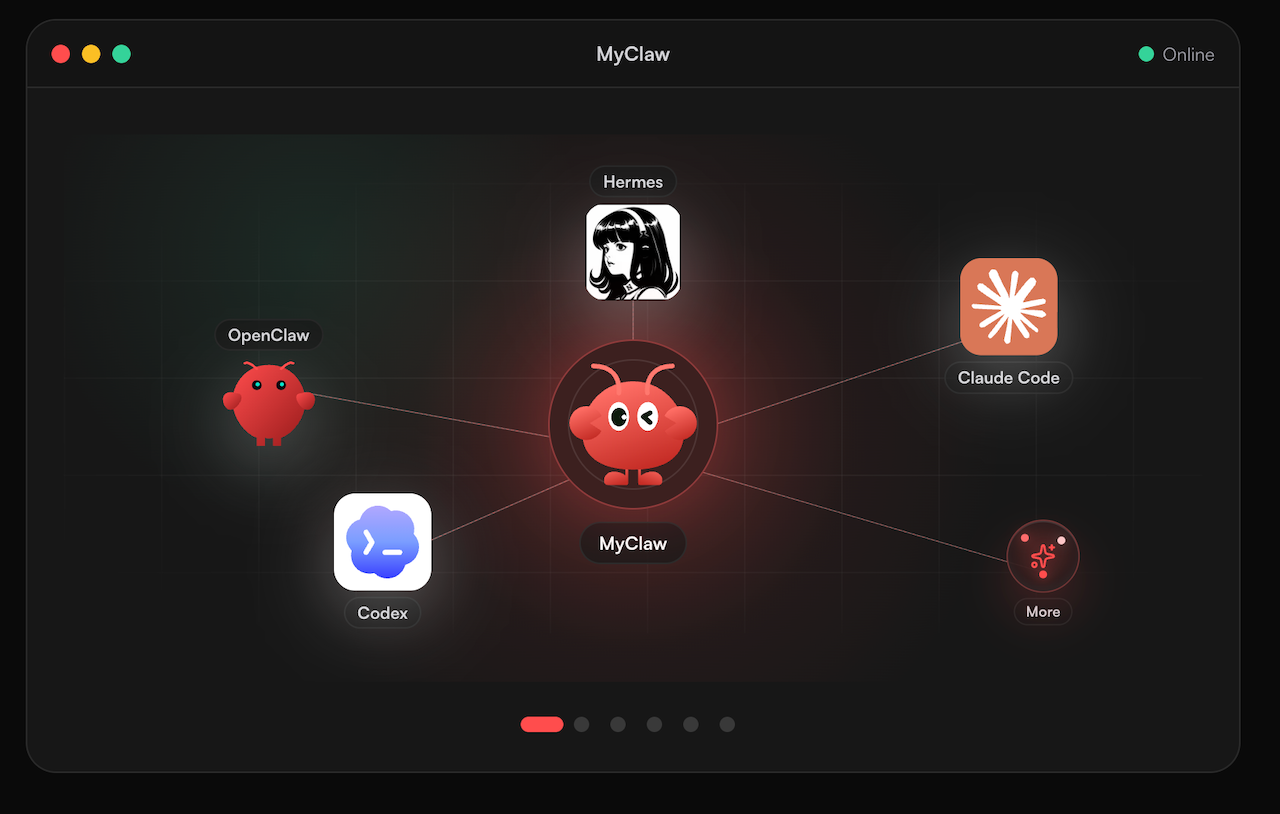
MyClaw is managed OpenClaw/Hermes agent hosting: always on, scheduled jobs, no server for you to babysit. It works with most popular models you already use.
A tech lead can park an overnight repository digest that lists failing CI jobs, stale pull requests, and docs pages returning errors, then drops the summary in chat before standup. An ops owner can schedule a weekday morning hygiene pass—broken internal links, expired runbook steps, queues past a retry threshold—and a Friday research digest that pulls only sources the team already approved. Connect the models and skills you have permission to use; expand later when the jobs are stable.
- Create a MyClaw workspace and connect the models and skills you are already authorized to use.
- Define the recurring work—repo digests, link checks, pipeline or queue hygiene—and attach schedules so the agent keeps running after you close the laptop.
- Review logs and tighten prompts or tools as the jobs stabilize; change models only when you are ready to re-validate the same evaluation set.
Conclusion
Qwen 2.5 vs 3.5 is a family upgrade: dense text Instruct models from the Sep 19, 2024 Qwen party line versus native multimodal, hybrid MoE-style agents described on Feb 17, 2026. Keep Image generation SKUs on their own page, cite exact cards when you quote MATH 83.1 or MMLU-Pro 87.8, and migrate only when modality, context, or agent workload needs the newer stack. For always-on digests and hygiene around that choice, MyClaw keeps OpenClaw/Hermes agents scheduled on the models you already run.
Skip the Setup, Run Best-in-Class AI Agents Now
Launch a managed OpenClaw or Hermes Agent workspace in minutes, with always-on hosting, updates, and support handled by MyClaw.