Muse AI Alternatives: 6 Personal Agents Worth Trying

By Nathan Cole
MyClaw Editorial
MyClaw
Run Best-in-Class AI Agents Now
Run OpenClaw or Hermes Agent on managed MyClaw hosting, so your AI agent stays online, updated, and ready for real work.
AI Takeaway
- Which Muse AI alternative should most people try first? MyClaw, if you want one always-on personal agent that answers in your existing messaging app and is not tied to a Meta account.
- Is there a free alternative to Muse AI? Try Poke first: its free plan works by text and signs up users worldwide (Poke), while Manus offers free daily credits (Manus) and a self-installed OpenClaw or Hermes Agent costs nothing beyond hosting and model bills.
- Which Muse alternative can UK and EU readers use? Start with MyClaw, which serves the UK and EU; ChatGPT Work and Manus also work there, while Muse and Gemini Spark do not.
- What is the most private alternative to Muse? Self-install OpenClaw or Hermes Agent, using hardware you control; that keeps your data off any big platform, at the cost of handling setup and security yourself.
- Does MyClaw run Muse? No, Muse is Meta's closed app, and MyClaw gives you a hosted, open-source agent built from OpenClaw or Hermes Agent instead.
Why Muse Users Shop Around: Regions, Privacy and Token Limits
Meta launched Muse on September 8, 2026, added Canada ten days later, and now offers it on phones, tablets, Macs, the web and WhatsApp. Pricing (Meta, Oct 9, 2026) starts with a free tier that has a weekly ceiling, then $20 monthly for Power or $100 monthly for Maximum. Our Muse AI guide explains how it works. Four complaints keep sending people elsewhere:
- Two countries only. Muse, including Muse for Small Business, serves the US and Canada. Meta has named no date for anywhere else.
- Privacy worries. An October 6 TIME investigation found that Muse builds running profiles of each user and of anyone they bring up, and Meta did not dispute the findings. Fast Company has since described early users restricting the agent after an "allow always" setting let it close a sale on its own.
- Opaque limits. Plans are measured in Muse tokens, a unit Meta never defines, so it is hard to predict when a week's allowance runs out.
- Meta lock-in. You need a Meta account, and the agent runs on Meta's own models.

Muse AI Alternatives Side by Side: Cost, Reach and Data Control
| Option | Maker | Starting price (vendor, checked Oct 9, 2026) | Free option | How you reach it | UK and EU | Best for |
|---|---|---|---|---|---|---|
| Muse (baseline) | Meta | Power $20/mo (Meta) | Yes, weekly cap | Muse apps, web, WhatsApp | No | US errands |
| MyClaw | MyClaw | Managed hosting, no Meta account | No | Your chat app | Yes | One always-on agent |
| ChatGPT Work | OpenAI | Plus, $20 monthly (OpenAI) | Limited, desktop app | ChatGPT apps and web | Yes | Research and files |
| Gemini Spark | AI Pro, $19.99 monthly (Google) | No | Gemini app | No | Gmail users | |
| Poke | The Interaction Company | Pro $19/mo (Poke) | Yes | Messages, SMS, Telegram | Yes | Texting an assistant |
| Manus | Manus | Pro $20/mo (Manus) | Yes, daily credits | Web, desktop, mobile | Yes | Finished projects |
| OpenClaw or Hermes Agent (self-hosted) | Open source | Free software | Yes | Messaging apps you wire up | Yes | Maximum privacy |
1. MyClaw: A Personal Agent in Your Own Chat App, UK and EU Included
MyClaw runs an always-on agent for you on the OpenClaw or Hermes Agent runtime, with no server to maintain. It handles errands, inbox follow-ups, reminders and research digests, and you reach it from the messenger you check daily instead of a separate app. It is usable from the UK and EU, it never asks for a Meta account, and the open-source runtime means the agent can move elsewhere later. For a look at managed hosts, see this roundup of Hermes Agent hosting.
Pros: available to UK and EU users, no Meta account, choice of runtime, and an agent that answers wherever you already chat.
Cons: no built-in retail checkout partners like Muse, and you decide which accounts it may touch.
- Sign in to MyClaw and select either OpenClaw or Hermes Agent.
- Connect your chat app after choosing a model, and grant only the accounts the first task needs.
- Move one weekly errand from Muse to the agent and compare after seven days.
2. ChatGPT Work: The Broadest Agent for Research and Finished Files

OpenAI retired its old agent mode and folded those jobs into ChatGPT Work, which runs longer multi-step tasks and returns documents, spreadsheets and decks. Plus ($20 monthly, OpenAI, checked Oct 9, 2026) unlocks Work on desktop, web and mobile, with a limited allowance of OpenAI's top model and optional credits beyond it. Free and Go accounts get a limited version in the desktop app. UK and EU users can subscribe, though Work is less polished at consumer checkout than Muse. Read the Muse AI vs ChatGPT head-to-head for details.
Pros: finished deliverables, a huge app ecosystem, and broad country support.
Cons: heavy use burns through credits, and errands like bookings feel bolted on.
3. Gemini Spark: Background Help for People Who Live in Gmail

Google's always-on agent comes inside Google AI Pro ($19.99 monthly) or Ultra ($99.99 or $199.99 monthly), based on Google's US pricing checked Oct 9, 2026. It sets up recurring jobs in Gmail, Docs and Slides and stops for approval before it pays for anything or sends mail. You need an adult, personal Google account, and Google keeps Spark out of Britain, the European Economic Area and Switzerland. The free Gemini app, now restricted to Flash-Lite, leaves Spark out entirely. Our Muse AI vs Gemini breakdown compares the two directly.
Pros: deep Google app access, a fair price for what AI Pro bundles, and strong research tools.
Cons: paid plans only, blocked for British and EU users, and thin support for work accounts.
4. Poke: An Assistant You Simply Text
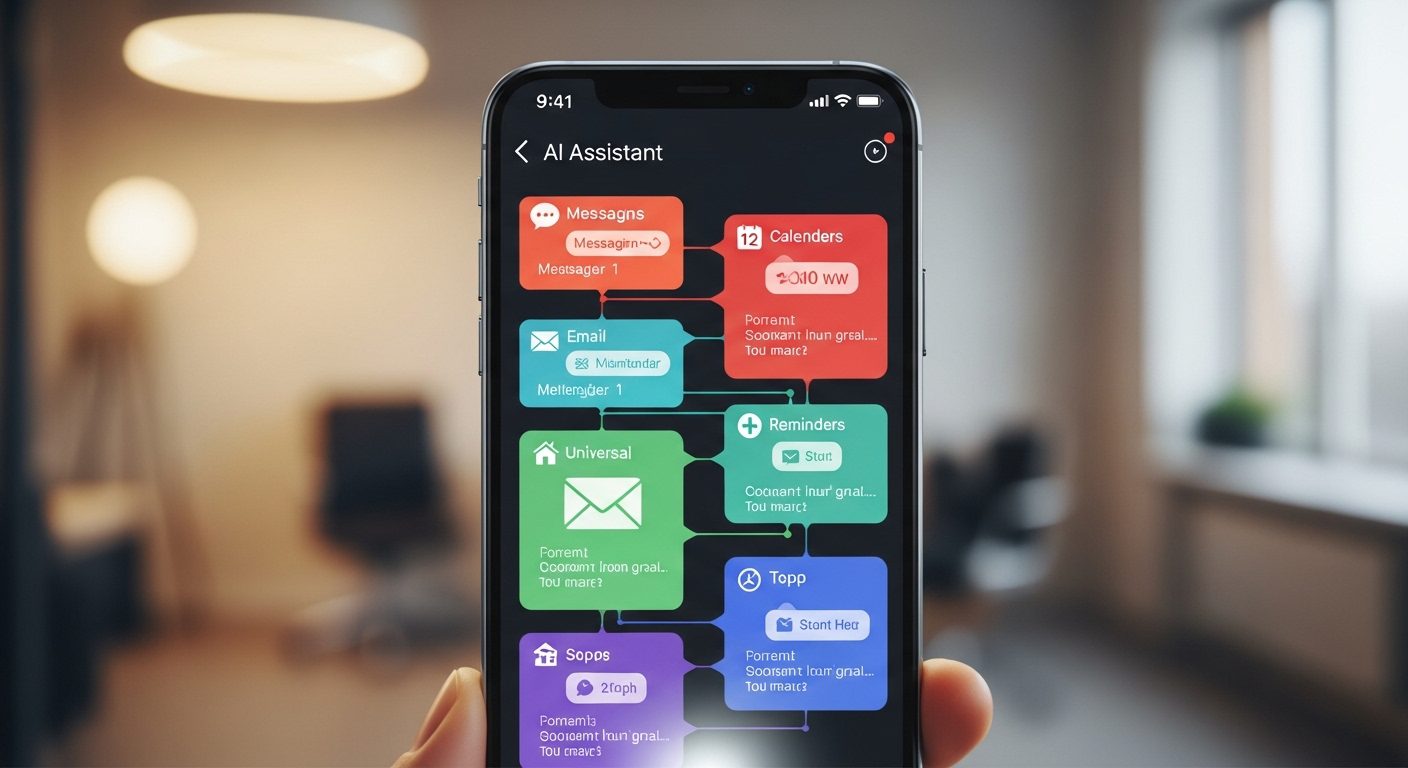
Poke has no app to install. You add it as a contact and message it over Apple Messages, SMS, RCS or Telegram, with WhatsApp in some markets, and it handles email, calendar and connected apps from the thread. Poke says sign-ups are open in all regions. Plans run Free, Pro at $19 a month and Ultra at $199 a month (Poke, Oct 9, 2026), with background automations starting on Pro. It suits people who already run their day from text threads. Cognition now owns the company behind it and has promised no immediate changes, but it has not committed to a roadmap beyond 2026.
Pros: zero setup, a usable free plan, and a texting experience that feels like messaging a friend.
Cons: an uncertain long-term roadmap, fewer controls than a full agent, and limited value for teams.
5. Manus: Hand Off Projects, Not Errands
Manus suits jobs that end in a deliverable, such as a researched report, a slide deck or a small website. The free plan gives 300 daily credits on a lighter model, Pro starts at $20 a month for 4,000 credits, and Team starts at $20 per seat (Manus, Oct 9, 2026). UK and EU customers can buy it, and it stores data in the US and Singapore. Meta agreed to buy Manus in December 2025, but China blocked the deal, and Manus has run independently again since September 1, 2026. Test it first on a task you can verify by hand, such as a one-page market summary. Our roundup of Manus alternatives covers similar tools.
Pros: strong end-to-end output, a free tier to test with, and flexible credit packs.
Cons: failed or looping tasks still consume credits, and it is weaker for everyday personal errands.
6. Self-Hosted Open-Source Agents: OpenClaw and Hermes Agent for Maximum Privacy
If keeping data away from any big platform matters most, put OpenClaw or Hermes Agent onto a machine you control. The software is free; your costs are hosting and model usage. Both connect to messaging channels such as WhatsApp, Telegram, Slack and Signal, run scheduled tasks and remember context between sessions. You also take on updates, backups and security. For other open runtimes, see our list of Hermes Agent alternatives.
Pros: full data ownership, any region, and model choice.
Cons: real setup work, no support desk, and downtime whenever your server stops.
Picking a Muse Replacement by Job, Budget and Country
- UK or EU based, or done with Meta accounts: MyClaw.
- Research, reports and spreadsheets: ChatGPT Work.
- Google Workspace power user outside Europe: Gemini Spark.
- You would rather text than install anything: Poke.
- A finished deck or site by tomorrow: Manus.
- Privacy first and comfortable with servers: OpenClaw or Hermes Agent, self-hosted.
- Happy with Muse in North America: stay, but switch off "allow always" and review its saved notes.
Move one recurring errand, run two candidates side by side for a week, and keep whichever finished more tasks with fewer surprises.
Skip the Setup, Run Best-in-Class AI Agents Now
Launch a managed OpenClaw or Hermes Agent workspace in minutes, with always-on hosting, updates, and support handled by MyClaw.