Cue by Manus Review (2026): Personal AI Agents Tested

By Emma Reed
MyClaw Editorial
MyClaw
Run Best-in-Class AI Agents Now
Run OpenClaw or Hermes Agent on managed MyClaw hosting, so your AI agent stays online, updated, and ready for real work.
AI Takeaway
- Is Cue by Manus worth trying? Yes for low-stakes errands if you already have an invite, since its agents answer calls and send mail from their own addresses, but keep payments and important accounts out of it for now.
- Is Cue free? Yes during invite-only early access, but an agent phone number is a separate subscription and Manus has not announced what Cue will cost once the promo ends.
- How is Cue different from Manus itself? Manus is built to hand back finished projects such as reports, slides and websites, while Cue is a standalone app where each personal agent has its own identity and keeps going after you log off.
- Can a Cue agent pay for things? It can spend up to a cap you choose through a Link wallet, although one reviewer could only use it with US payment details, and Manus has not documented approval defaults or refunds.
- Does MyClaw run Cue or Manus? No, both are closed Manus products, and MyClaw instead gives you managed hosting for OpenClaw and Hermes Agent, an independent always-on assistant you message from your own chat app.
Cue at a Glance: Launch, Platforms, Access and Price
Manus released Cue on September 28, 2026, a few minutes after the Manus 2.0 launch that brought Cascade, Studio and Automations. The company behind it is independent again: Meta's planned purchase fell apart after Chinese regulators blocked it, Manus has run on its own since September 1, and it announced a $500M funding round on October 8.
| Item | Status as of October 10, 2026 |
|---|---|
| Maker | Manus |
| Launched | September 28, 2026 |
| Platforms | Web, Windows, Apple-silicon Macs, Android, iPhone (iOS 17 or later) |
| Access | Invite code required; invitees receive codes to share |
| Official price | Free in early access; agent phone number billed separately |
| Unofficial prices (testers and store listings) | Phone number $9.99 a month; one tester saw an in-app "Cue Plus" label of $20/mo marked free for a limited time |
| Google Play rating | 4.7 stars from roughly 1,800 reviews (October 9) |
Treat the price row with care: none of it appears on a Manus pricing page. The iPhone app also cleared App Store review only after launch, so early iPhone testers had to use Android or the web.

Cue vs the Main Manus App: Errands Instead of Deliverables
The flagship Manus product is a task runner. You describe a project, it works through it on a cloud machine and returns an artifact. Its plans, per Manus on October 10, 2026, are a free tier with 300 daily credits, Pro starting at $20 monthly, which buys 4,000 credits (with $40 and $200 tiers above it), and Team at $20 per seat. Our full Manus review covers how that credit system plays out on real jobs.
Cue sits beside it on the same infrastructure but aims at daily life. Instead of one job with an end state, you create named agents that stay around: one handles restaurant bookings, another chases a refund, a third tracks a package. Phone calls draw on a weekly Cue allowance rather than Manus credits, and Manus subscribers can open Cue from the Agents tab in the sidebar. A paid Manus membership does not unlock anything extra in Cue today.
What a Cue Agent Can Do in Practice
Answering Calls and Sending Email From Its Own Address
Each agent can get its own inbox and a phone number. You forward calls to it, it talks to the caller and leaves you a summary, and it writes emails from an address that isn't yours. Manus says numbers are offered in select countries for now, some with voice only, without naming them. Testers who got a US +1 line found it handled calls but not SMS.
Paying Up to a Spending Cap
Purchases run through Link, Stripe's checkout service. You set a cap, and the launch examples show the agent asking you to tap to approve. Tester screenshots show the wallet marked as US-only, which Manus has not confirmed, so readers in the UK, the EU or elsewhere should check it accepts their card first.
Splitting Work Across a Group Chat of Agents
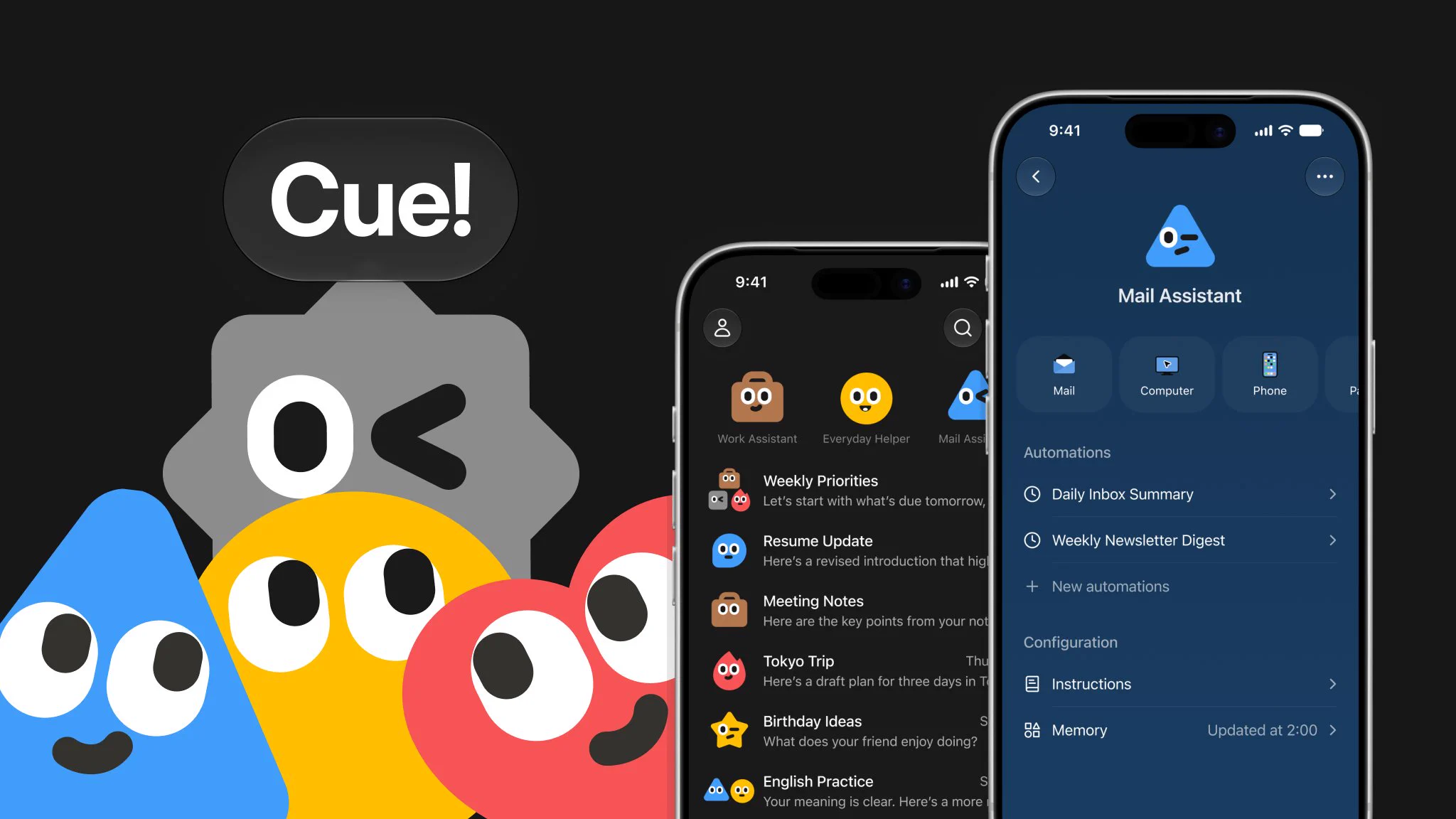
Cue's most distinctive feature is teamwork. You put several agents into one thread around a common objective, and each keeps its own memory while passing work along. Manus's example has one agent scouting venues for a product launch, a second narrowing the list and a third drafting the deck, with you making the final decision.
Messaging Apps, Connected Services and QR Ordering
Manus's help pages say an agent can sit in iMessage, Telegram, LINE and Slack at once, and the Play listing names connected services such as Gmail, Notion, Oura and MyFitnessPal. At supported cafes and restaurants you scan a QR code to spin up an ordering agent and confirm the bill yourself. One caveat: the store listing says a dedicated computer comes "depending on availability," so not every agent may get its own machine at every moment.
Price and Access: Invite Codes, a Promo and Unpublished Plans
Getting in is the first hurdle. Manus opened with a public code, MEETCUE, for a limited number of early sign-ups, first come first served. That code may be exhausted by now, but anyone admitted gets extra invites, so asking in Manus communities is the realistic route.
What Manus states officially is short. Cue is free while in early access. A phone number is a separate subscription. Calls count against a weekly allowance whose size isn't published. Nothing says what Cue will cost when the promo ends.
Everything else is unofficial. Several testers, plus app-store purchase listings, show $9.99 a month for an agent's phone number. One reviewer also saw a plan called Cue Plus listed at $20 a month inside the app, marked free for a limited time, alongside a weekly usage meter. Either figure could change without notice, so check the numbers in your own client before budgeting.
Safety Gaps to Check Before Handing Over a Card
Giving software a phone line, an inbox and a payment method raises the stakes. Cue has no terms, privacy or help pages of its own, so the general Manus policies are the only documents that apply. Manus says you choose which actions need approval, but no public page lists the default settings, explains how the cap is enforced, names who funds the wallet, or describes refunds.
Until that changes, a cautious setup makes sense:
- Start with a very small spending limit.
- Give agents a separate email account rather than your main one.
- Keep early tasks low stakes, such as bookings and reminders, not bill negotiations.
- Read the call summaries and sent mail for the first week.
How Cue Compares With Muse and OpenAI Dots
Cue arrives alongside two big-name rivals. Meta's Muse is limited to American and Canadian users and has faced scrutiny over the user profiles it builds, a topic our Muse AI alternatives guide explores. OpenAI's Dots lives inside ChatGPT, is included with qualifying ChatGPT Pro or Business Premium subscriptions, and starts each person with a single dot. Our Dots AI explainer covers that rollout.
Cue's edge is that you can run several agents at once, each with its own contact details. Its weaknesses are the invite gate, unpublished pricing and thin documentation on payments.
Cue Review Verdict: Who Should Try It Now
Pros:
- Agents can take calls, send email and work as a team without your own accounts in the loop
- Free while early access lasts
- Available on web, desktop and both mobile platforms
- Phone usage doesn't burn Manus credits
Cons:
- Invite-only, with no published long-term price
- Phone and payment features look limited outside the US in early tests
- Approval defaults and wallet rules are undocumented
- A dedicated computer isn't guaranteed for every agent
Verdict: try Cue now if you hold a code and have errands where a mistake costs little. Wait if you need published pricing, want payments outside the US, or plan to connect important accounts. If Cue's gate or gaps rule it out, this guide to Manus alternatives lists other agents worth a look.
Skip the Invite Queue and Host Your Own Agent on MyClaw
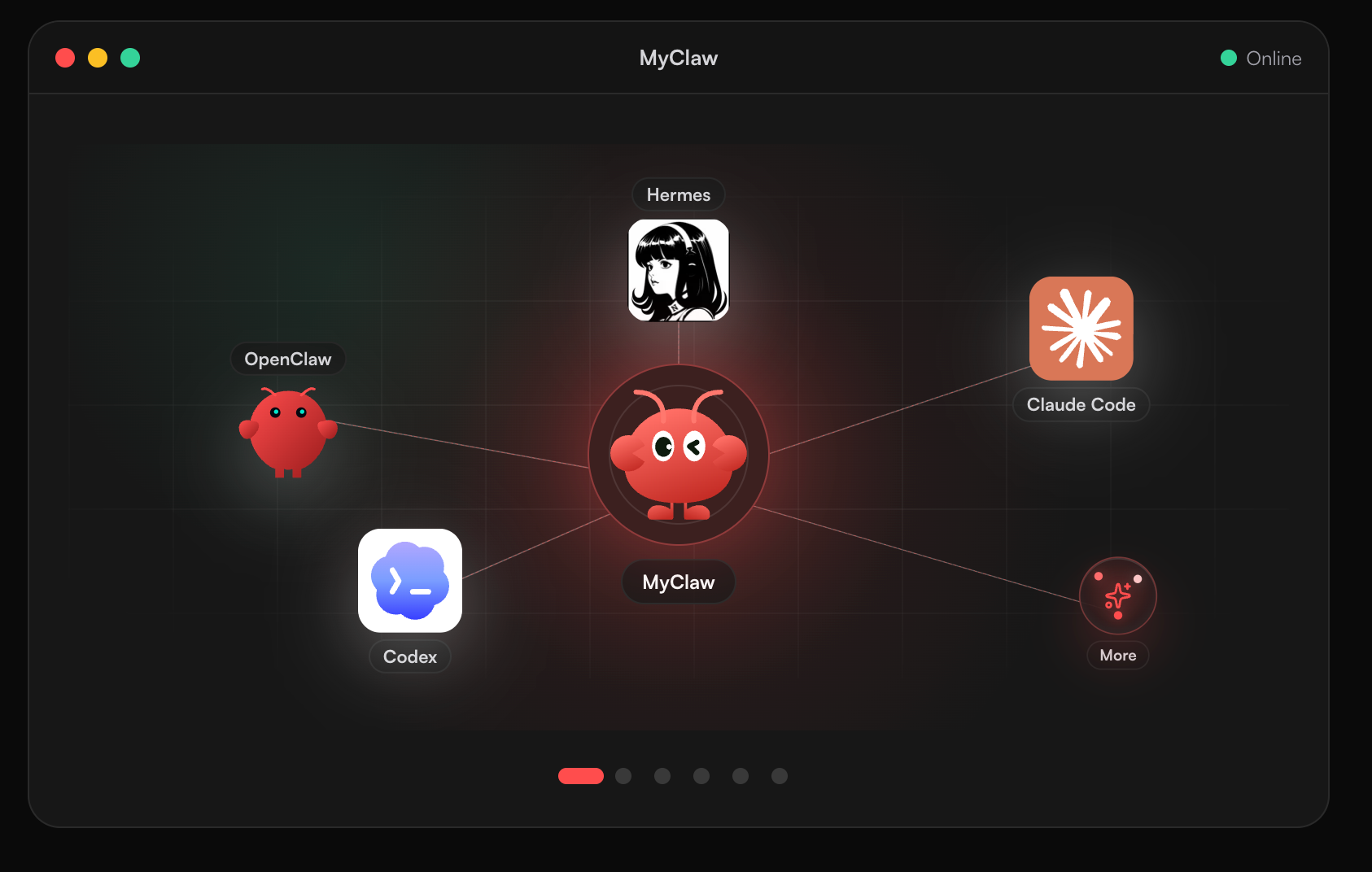
Cue's appeal is an assistant that keeps working when you step away. MyClaw delivers that through OpenClaw or Hermes Agent, kept online and updated for you, with no invite code involved. It doesn't run Cue or Manus. It's a separate assistant you shape yourself, and our comparison of Hermes Agent hosts explains how managed setups differ.
- Open MyClaw and start an agent on OpenClaw or Hermes Agent.
- Pick the model you prefer, connect your chat app, then grant only the inbox or calendar the first job needs.
- Hand it an errand you'd have queued for a Cue agent, and review its log after a few days.
Skip the Setup, Run Best-in-Class AI Agents Now
Launch a managed OpenClaw or Hermes Agent workspace in minutes, with always-on hosting, updates, and support handled by MyClaw.