LongCat 2.5 vs Space Bunny: Specs, Benchmarks and Pricing (2026)

By Julian Brooks
MyClaw Editorial
MyClaw
Run Best-in-Class AI Agents Now
Run OpenClaw or Hermes Agent on managed MyClaw hosting, so your AI agent stays online, updated, and ready for real work.
AI Takeaway
- What is Space Bunny next to LongCat-2.5? MiniMax’s stealth model (Space Bunny Alpha), later named an early MiniMax M3.1 Flash after more than 200 trillion anonymous tokens (MiniMax blog, Oct 19, 2026).
- How do LongCat-2.5 and Space Bunny / M3.1 Flash differ on paper? Both advertise about a 1M-token context and agent or coding focus; LongCat-2.5 is 1.6T / ~48B-active (Meituan, Nov 2026), while M3.1 Flash is ~428B / ~23B active with Flash-tier list rates (NVIDIA model card, Oct 2026).
- Who wins on vendor coding benches? On DeepSWE v1.1, MiniMax lists M3.1 Flash at 73.7% vs LongCat-2.5 at 64.6%—different vendor tables, so verify on your repos (MiniMax Oct 19, 2026; LongCat Nov 2026).
- What do the APIs list for pay-as-you-go? LongCat-2.5 limited-time ~$0.30 / $0.006 / $1.20; M3.1 Flash flat ~$0.15 / $0.60 / $0.015 per 1M tokens—confirm live billing (vendor docs, Oct–Nov 2026).
- How do you keep the pilot honest after hours? Use an always-on OpenClaw or Hermes agent on MyClaw to schedule the same frozen prompt pack, collect scores, and send a digest—without babysitting a server.
LongCat 2.5 vs Space Bunny at a Glance
Start with identity: Space Bunny (also listed as Space Bunny Alpha) was MiniMax’s anonymous stealth model. On October 19, 2026, MiniMax said Space Bunny was an early version of MiniMax M3.1 Flash after processing more than 200 trillion tokens in stealth. LongCat-2.5 is Meituan’s native multimodal agent model, with a public release around November 2, 2026 after a November 1 blog post—see the LongCat-2.5 review for the full Meituan rundown. Both sit in the wider Chinese AI Model wave of long-context coding agents.
| Dimension | LongCat-2.5 (Meituan) | Space Bunny → M3.1 Flash (MiniMax) |
|---|---|---|
| Identity | LongCat-2.5 GA ~Nov 2, 2026 (Preview Sep 25) | Stealth Space Bunny → M3.1 Flash Oct 19, 2026 |
| Size | ~1.6T total / ~48B active | ~428B total / ~23B active (NVIDIA card, Oct 2026) |
| Context | 1M in / up to 128K out | Up to 1M |
| Modalities | Native multimodal (text/image; video on platform) | Text/image (video listed on Space Bunny Alpha) |
| DeepSWE v1.1 (vendor) | 64.6 (LongCat table, Nov 2026) | 73.7% (MiniMax blog, Oct 19, 2026) |
| Terminal Bench 4.0 (vendor tables) | 38.5 (LongCat, Nov 2026) | 38.1 (NVIDIA peer table, Oct 2026) |
| PAYG list per 1M tokens | ~$0.30 / $0.006 cached / $1.20 out | ~$0.15 / $0.015 cached / $0.60 out |
| Weights | Not generally public | Marked “later” at launch—re-check live pages |
What Each Model Is Optimized For
LongCat-2.5 leans into long-horizon agent work with native vision: multi-step tools, large codebases, full-project builds, and vendor rows that highlight browse and visual coding (BrowseComp 91.9 and Vision2Web 78.6 in Meituan’s November 2026 table). Thinking mode shows up in evaluation footnotes when you try to reproduce those scores.

M3.1 Flash—the GA name for Space Bunny—is pitched as a Flash-tier agent model for coding, computer use, and cybersecurity. MiniMax claims everyday output speeds of 200+ tokens per second and a P50 around 170+ TPS (MiniMax blog, Oct 19, 2026). Vendor highlights include BankerToolBench 76.2, OSWorld 2.0 / V2 61.7, Agents’ Last Exam 29.6, and CyberGym about 82–82.2% (MiniMax blog and NVIDIA model card, Oct 2026). Early forum takes that compared LongCat-2.5-Preview to Space Bunny Alpha can add color, but dated vendor tables and your own harness still decide the call.
Specs and Access Side by Side
On the Meituan side you call LongCat-2.5 on the LongCat API Platform through OpenAI-compatible or Anthropic-compatible endpoints. Vendor notes list harnesses such as Claude Code, Codex, Hermes, and OpenClaw. Context is 1M tokens with outputs up to 128K; the stack is described as about 1.6T total parameters with roughly 48B active per token.
On the MiniMax side, Space Bunny Alpha’s stealth listing advertised fast inference, adjustable reasoning, tool use, and a 1M-token window before that free stealth window closed. M3.1 Flash keeps the 1M context story, adds configurable reasoning_effort levels (low through max on the NVIDIA card), and ships through the MiniMax API, M Plan, and MiniMax Code. Size is listed around 428B total with about 23B active per token. Weights for M3.1 Flash were described as coming later at launch—confirm the live status before you plan an on-prem path.
For peer context, see Best AI Models Right Now. For another Flash-class coding price and quality frame, read DeepSeek V4.1 Flash vs DeepSeek V4 Pro.
Benchmarks You Can Compare Fairly
Cross-lab leaderboards rarely share one harness, so treat every row as labeled and dated. The fairest glance rows above are DeepSWE v1.1 and Terminal Bench 4.0 because both vendors publish a number you can put side by side—while still remembering the runs are not identical.
On DeepSWE v1.1, MiniMax lists M3.1 Flash at 73.7% (Oct 19, 2026); Meituan’s LongCat-2.5 table lists 64.6 (November 2026). That gap favors Flash on the vendor coding narrative, but LongCat’s same table also posts strong browse and visual rows that M3.1 Flash’s launch note does not mirror one-for-one. On Terminal Bench 4.0, the published vendor-side figures sit close: 38.5 for LongCat-2.5 versus 38.1 for M3.1 Flash in the NVIDIA peer table (Oct 2026).
Third-party coverage around the Oct 2026 MiniMax launch also flagged a high hallucination rate on Artificial Analysis omniscience-style measures even when accuracy looked competitive. Keep human review on factual digests, and freeze one prompt pack, repo fixture, and tool budget before you crown a winner.
Pricing and When List Rates Matter
LongCat pricing docs checked in November 2026 list limited-time discounted pay-as-you-go around $0.30 uncached input, $0.006 cached input, and $1.20 output per 1M tokens (also shown as ¥2 / ¥0.04 / ¥8). Rates change; the platform’s live billing page is authoritative.
MiniMax’s October 19, 2026 launch post lists M3.1 Flash at $0.15 input, $0.60 output, and $0.015 cached input per 1M tokens. Space Bunny’s free stealth window on aggregators is over, so budget against the GA list unless a host still marks a temporary promo.
For agent loops, watch cache hits and thinking or reasoning tokens separately from the headline input rate. A long harness that re-sends a warm repo map will land on the cached line; a verbose reasoning setting will land on output. Run a short metered pilot on each API before you scale overnight jobs.
Which Should You Pick for Agent and Coding Work?
Pick LongCat-2.5 when you want Meituan’s long-horizon multimodal story—visual coding, browse-heavy agent traces, and a 128K output ceiling inside the LongCat API and harnesses you already wire for OpenAI- or Anthropic-shaped requests. Pick Space Bunny’s successor, M3.1 Flash, when Flash-tier list rates, computer-use and cybersecurity vendor rows, and MiniMax’s API or MiniMax Code path fit the job you actually ship.
Many teams will keep both keys for a quarter: LongCat for vision-aware project builds, M3.1 Flash for fast iterative coding agents. If Hermes is your daily driver, Best AI Models for Hermes can help you think about harness pairing while you A/B the two APIs on the same frozen pack.
Keep the Side-by-Side Eval Running Without a Server
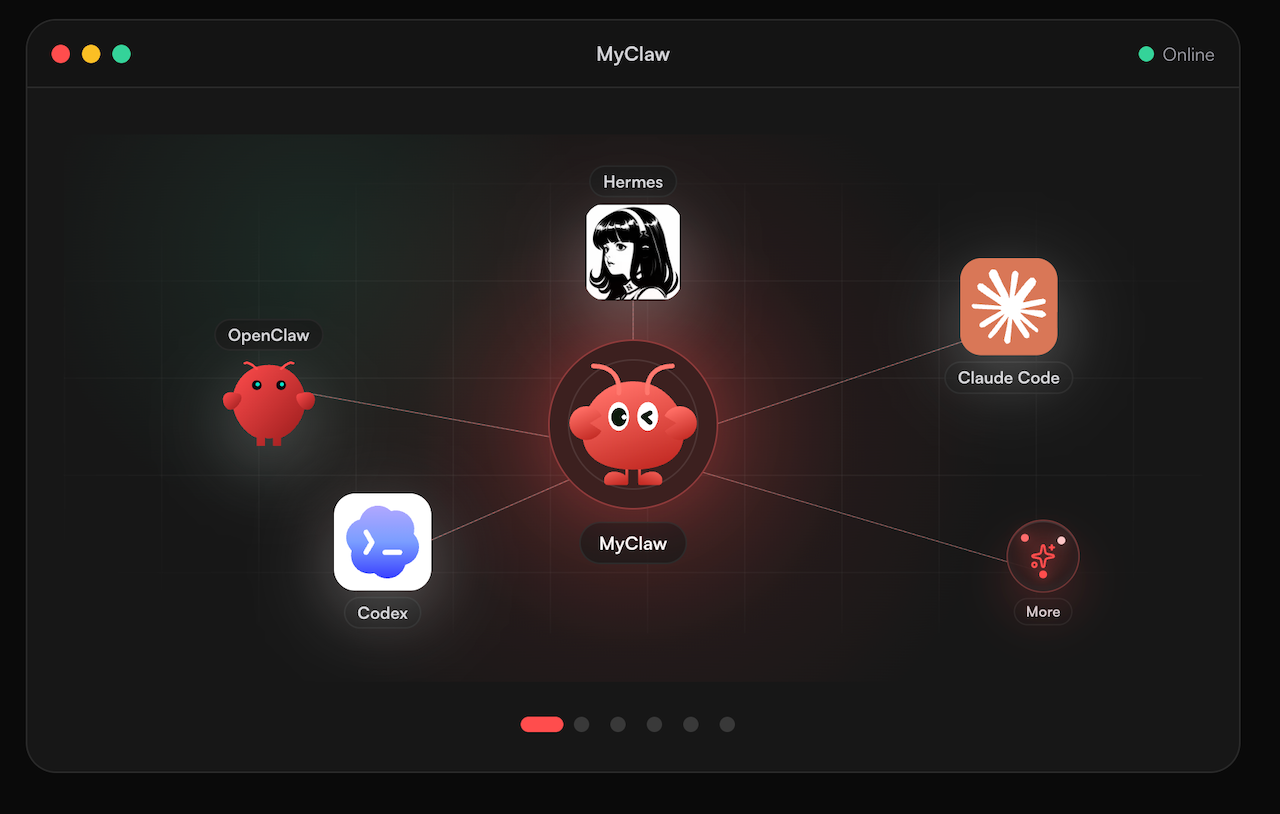
After you shortlist LongCat-2.5 and Space Bunny / M3.1 Flash, you still need fresh scores once pricing pages and changelogs move. When release watches, recurring A/B prompts, and bench summaries should keep landing while you are offline, run that loop on an always-on OpenClaw or Hermes agent hosted on MyClaw—no laptop left open, no server to patch. Digests can reach you by email, Telegram, WhatsApp, or browser.
Concrete scenarios: a morning note that flags LongCat or MiniMax changelog and pricing moves; a scheduled checklist that reminds you to re-run the same frozen prompt pack on each vendor API; or a Friday summary that compares this week’s notes to last week’s—then you decide which default stays. New to OpenClaw? See What Is OpenClaw.
- Start a MyClaw agent on OpenClaw or Hermes and point it at the channel where comparison digests should arrive.
- Connect the docs folder or inbox that holds your frozen prompt pack, prior scores, and both vendors’ release-note links.
- Assign one recurring job first—such as a daily dual release watch plus a weekly side-by-side re-run summary—then add more checks once the drafts hold.
Conclusion
Space Bunny is MiniMax M3.1 Flash’s stealth past; LongCat-2.5 is Meituan’s long-horizon multimodal agent bet. On vendor DeepSWE, Flash posts the higher listed coding score, while LongCat brings stronger published browse and visual rows and a different PAYG shape. Put both on one frozen harness pack, read the live meters, and keep the winner only after your own repos agree. If you want those comparison digests without babysitting a server, use the hosted OpenClaw or Hermes path in the section above.
Skip the Setup, Run Best-in-Class AI Agents Now
Launch a managed OpenClaw or Hermes Agent workspace in minutes, with always-on hosting, updates, and support handled by MyClaw.