Kimi K3.1 Pro vs K3: Should Teams on K3 Switch Now?

By Julian Brooks
MyClaw Editorial
Compare in MyClaw
Compare Kimi K3.1 Pro and Kimi K3 on your own work
Run the same task in both models to compare quality, tool behavior, speed, and cost per accepted result before migrating.
AI Takeaway
- Is moving from Kimi K3 to Kimi K3.1 Pro a code change? Barely. Moonshot's docs (Oct 24, 2026) list one shared request contract for the pair: always-on thinking, low/high/max effort, fixed sampling values and a 1M-token window. In most stacks you edit one string,
kimi-k3tokimi-k3.1-pro, and then re-run your evals. - Will Kimi K3.1 Pro lower my per-task bill? Not by much. List rates fall by a third, yet Artificial Analysis measured $2.11 for each Intelligence Index task run on K3.1 Pro against $2.00 for K3 (independent, Oct 24, 2026). Your own token counts decide the outcome.
- How much faster is Kimi K3.1 Pro than K3? Roughly twice as fast on output. Artificial Analysis clocked 77.1 tokens per second for K3.1 Pro and 38.5 for K3 on Kimi's own API, with first tokens at 2.89s and 3.44s (independent, Oct 24, 2026).
- When should a team stay on Kimi K3? Stay if you self-host today, if legal has only approved the K3 licence, or if production depends on pinned eval results. K3.1 Pro weights are promised by Nov 4, 2026, so that gap may close soon.
- How can I keep long agent jobs running without babysitting a server? Hand it to a hosted assistant rather than a terminal on your desk. MyClaw keeps an assistant running for you around the clock, on a framework you pick for it (Hermes Agent or OpenClaw),, reachable from your messenger, so a long task keeps going after you close the laptop.
Same API Contract, One Line to Change
For a team already in production on K3, the useful news is how little moves. Moonshot's quickstarts for both models (Oct 24, 2026) list identical limits: the reasoning pass is permanent, reasoning_effort offers three settings, with max applied whenever you leave it out, max_completion_tokens defaults to 131,072, and temperature 1.0 and top_p 0.95 are fixed, so you should omit them from requests. Both share a 1,048,576-token context window and automatic caching, and neither accepts public image URLs for vision input, so base64 or uploaded file IDs carry over too.
That means your client code, tool schemas and retry logic carry over unchanged. Multi-turn and tool-call flows still need the full assistant message, reasoning fields included, passed back on the next turn, exactly as K3 required.
What does change is the model behind the ID, and with it the answers, the token counts and the pace at which they arrive. Plan a short shadow period where both IDs see the same requests, so you can compare outputs before cutting over. If you want the full list of upgrades and every launch benchmark, our Kimi K3.1 Pro review covers them; this page sticks to the decision of whether to swap, and when.

Kimi K3.1 Pro vs K3 Side by Side
Price and release rows are vendor figures from Moonshot; rows marked AA are independent measurements from Artificial Analysis. Both were read on Oct 24, 2026.
| Kimi K3.1 Pro | Kimi K3 | |
|---|---|---|
| API ID | kimi-k3.1-pro | kimi-k3 |
| Released (Moonshot) | Oct 23, 2026 | Jul 16, 2026 |
| List input / output, per 1M | $2 / $10 | $3 / $15 |
| List cache hit, per 1M | $0.20 | $0.30 |
| Cache write, 5 min / 1 h | $2 / $4 | $3 / $6 |
| AA Intelligence Index | 55 | 44 |
| AA output speed | 77.1 tokens/s | 38.5 tokens/s |
| AA time to first token | 2.89s | 3.44s |
| AA cost per index task | $2.11 | $2.00 |
| Open weights | Promised by Nov 4, 2026 | Available on Hugging Face (Kimi K3 License) |
In short, K3.1 Pro scores higher and streams faster, while per-task spend stays level with its predecessor. For how K3 itself stacked up against a closed frontier rival, see Kimi K3 vs Opus 4.8.
Per-Task Cost and Wall-Clock Time on Real Workloads
List prices tell only half the story with always-thinking models, because the hidden reasoning counts toward billed output. Artificial Analysis counted 150M output tokens for K3.1 Pro across its index run and 160M for K3 (independent, Oct 24, 2026), yet the per-task figure still came out slightly higher for the new model. On that benchmark mix, treat the two as roughly equal per task, not as a saving.
Time is where the gap shows. Our arithmetic, assuming a job that emits 30,000 output tokens and that AA's first-party speeds hold: about 6.5 minutes on K3.1 Pro (30,000 ÷ 77.1) against about 13 minutes on K3 (30,000 ÷ 38.5). Chain ten such steps in one agent run and the gap grows to roughly an hour saved per run, under the same assumptions.
Caching softens the bill for repeat-heavy pipelines. Cache hits are billed at $0.20 per 1M tokens for K3.1 Pro and $0.30 for K3 (Moonshot, Oct 24, 2026). Agents that resend a long system prompt or codebase on every call benefit most. K3's pricing against another open-weight rival is laid out in our GLM-5.3 vs Kimi K3.
A better test is to log tokens per task on a sample of your own traffic for a week on each ID. Benchmark mixes rarely match a production queue, and a coding agent that rereads large files behaves very differently from a short chat workload. Split the sample by task type, compare median and worst-case tokens, and price both IDs from those numbers rather than from the index alone.
Behaviour Differences to Re-Test Before Switching
Identical knobs do not mean identical outputs. Moonshot describes K3.1 Pro as K3 put through far more reinforcement learning after pretraining, so expect changes in answer length, tool-call habits and how readily it stops on its own. Re-test these before you flip traffic:
- Prompt regressions on your saved eval set, especially formatting and JSON outputs.
- Token budgets: if you cap
max_completion_tokens, check that long reasoning still finishes inside the cap. - Tool loops: count calls per task, since a model that plans more can call tools more.
- Effort settings: try low effort on K3.1 Pro before assuming you need max; it may match K3 at max on simple work.
One caution carries over: Moonshot still advises against relying on its built-in web search tool in production (Oct 24, 2026), so keep your own search integration. To see how K3 handled a speed-focused challenger, our K3 matchup with DeepSeek's V4.1 Flash is a useful baseline.
When Kimi K3 Still Makes Sense
K3 remains the right call in four situations.
First, self-hosting. K3's files are downloadable from Hugging Face, licensed under Moonshot's own K3 terms, while K3.1 Pro weights are only promised by Nov 4, 2026. A promise is not a download, so plan on K3 until the files actually appear.
Second, licensing. If legal reviewed the K3 licence, a new release may need its own review, and the terms for K3.1 Pro are not public yet.
Third, pinned evaluations. Regulated or customer-facing flows often freeze a model after sign-off. Swapping mid-quarter can cost more in re-validation than the speed gain returns.
Fourth, batch jobs with no one waiting. When output lands overnight, faster streaming matters little and per-task spend is close to level, so the case for switching rests on quality alone. If K3 already passes your acceptance checks on those jobs, there is no rush.
Everyone else running K3 through the API, particularly interactive coding and agent work, should trial K3.1 Pro now. Developers waiting on each reply feel the doubled stream rate immediately, and the higher index score suggests fewer retries on hard tasks, though your own logs should confirm that.
Hand Long Agent Runs to a Hosted MyClaw Assistant
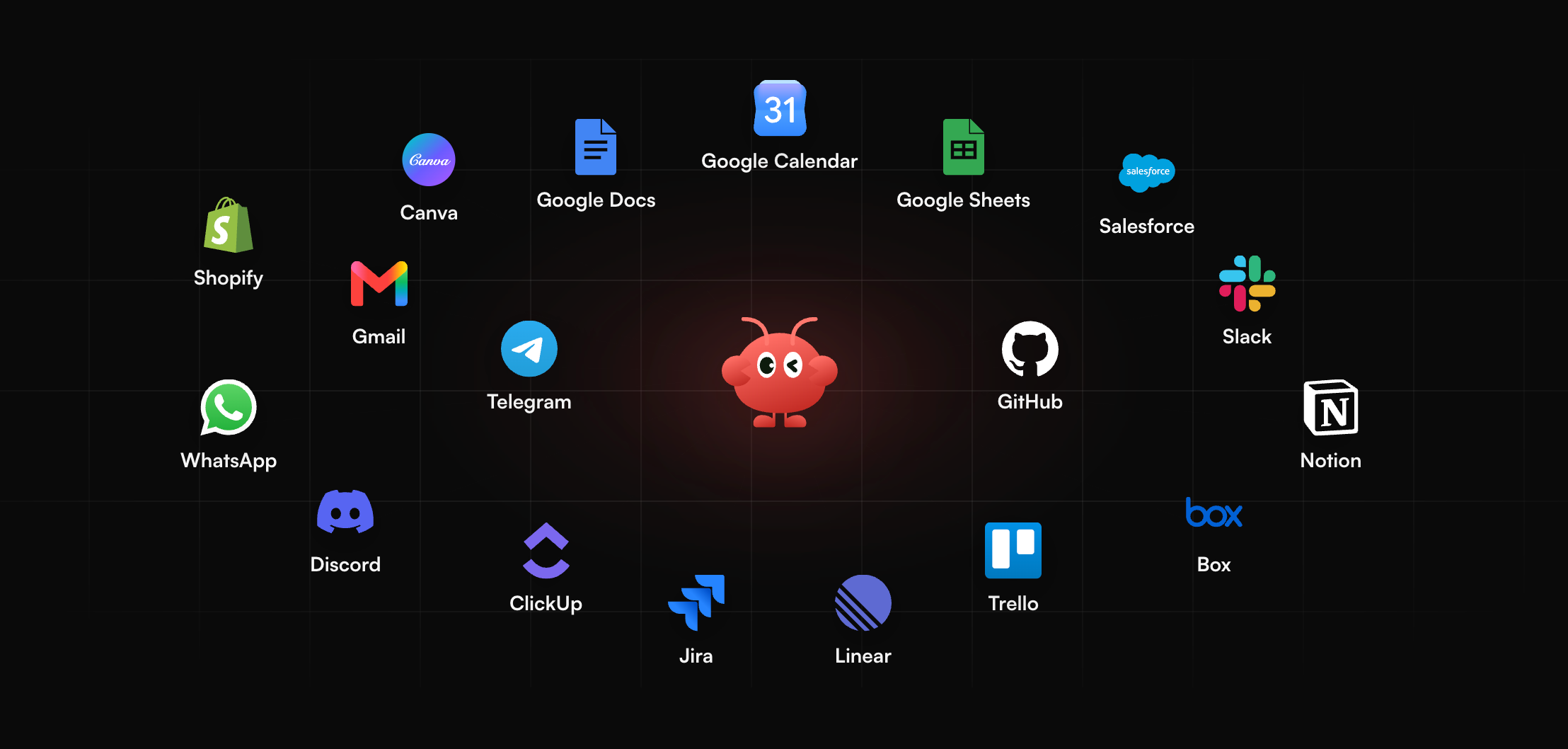
A faster model helps most when the agent around it never goes offline. MyClaw does not sell models; it hosts a personal assistant for you on Hermes Agent or OpenClaw, whichever framework you prefer. Either framework, once hosted, works with most popular models. A first task can be running within minutes:
- Sign up for MyClaw.
- Select a framework, then the model you want it to call.
- Pair your messenger and send the first job.
Conclusion: Kimi K3.1 Pro vs K3 for Teams Already on K3
Switching K3 traffic to K3.1 Pro is a one-line change with the same request rules, roughly double the output speed and a higher independent score, at near-level spend per task. Move interactive and agent traffic after a short eval pass. Keep K3 where you self-host, need a cleared licence or run frozen evaluations, and revisit once K3.1 Pro weights ship, promised by Nov 4, 2026.
Compare in MyClaw
Compare Kimi K3.1 Pro and Kimi K3 on your own work
Run the same task in both models to compare quality, tool behavior, speed, and cost per accepted result before migrating.