Kimi K3.1 Pro Review: Benchmarks, Pricing and Upgrade Advice

By Julian Brooks
MyClaw Editorial
Kimi K3.1 Pro
Try Kimi K3.1 Pro
Start a chat with Kimi K3.1 Pro for coding, writing, or research.
Chat with Kimi K3.1 ProAI Takeaway
- What is Kimi K3.1 Pro pricing on the API? Per 1M tokens, Moonshot's pricing page (Oct 24, 2026) shows $2 input, $10 output and $0.20 for cache hits, down from $3, $15 and $0.30 on K3. Access opens after a $1 top-up, and Artificial Analysis independently scored it 55 on its Intelligence Index against K3's 44 (Oct 23, 2026).
- How strong is it for coding agents if you only trust outside tests? Artificial Analysis recorded 67% on Terminal-Bench 4.0, the top score it has logged for any model, up from 13% for K3 (Oct 23, 2026). Moonshot's own figure is 65.7% (vendor-stated).
- Can you self-host it right now? Not yet. Moonshot's launch post promises the full weights by Nov 4, 2026, and no licence has been named so far.
- Should you use the Highspeed variant or the standard one? Highspeed runs 2–3× faster (vendor-stated) and doubles both the input and the output rate, so save it for interactive sessions where every wait costs you attention.
- How do you keep a multi-hour coding or research task progressing after you log off? MyClaw's hosted agent carries on from our servers once the laptop is shut, and it works with most popular models. Updates land in the messenger you already check.
What Kimi K3.1 Pro Is and How to Access It
Moonshot AI released Kimi K3.1 Pro on Oct 23, 2026 as the first model in its K3.1 series. There is no fresh base model behind it: the launch blog describes it as Kimi K3 with far more reinforcement-learning compute in post-training. Artificial Analysis lists 2.8 trillion total parameters, 104 billion active per token, a context window of 1M tokens, plus text and image input (Oct 23, 2026). Moonshot's API guide also documents video input (Oct 24, 2026).
Access arrived on day one across four surfaces: Kimi.ai and the mobile apps, Kimi Work for Windows and Apple silicon Macs (version 3.1.0 or later), Kimi Code through its /model command, and the Kimi API under the IDs kimi-k3.1-pro and kimi-k3.1-pro-highspeed. API customers can request zero data retention. Enterprise administrators must switch the model on, since it is off by default at launch. For where Moonshot sits among other labs, see our guide to Chinese AI models.
What Changed From Kimi K3
With the base shared, the gains come from post-training, not size. Artificial Analysis measured these moves from K3 to K3.1 Pro (Oct 23, 2026, independent):
- Intelligence Index: 44 to 55, fourth overall
- Terminal-Bench 4.0: 13% to 67%
- GDPval-AA, which scores knowledge-work output: up 312 Elo to 1,846, third overall
- AutomationBench-AA, built on SaaS workflows: 58% to 73%
- Humanity's Last Exam: 47% to 52%
- Hallucination rate on AA-Omniscience: 53% to 44%
Moonshot adds internal results (vendor-stated): its long-horizon Kimi Code Bench 3.0 rose from 55.95% to 61.2%, and on its Hallu Bench Hard stress set the claim-level hallucination rate fell from 23.4% to 8.3%. Moonshot itself warns those rates are not everyday error rates. For a baseline on what K3 did well, our DeepSeek V4.1 Flash and Kimi K3 comparison covers its strengths against a budget rival.
Benchmarks: Moonshot's Claims Next to Independent Tests
Moonshot reports every headline score at maximum reasoning effort, mostly through a third-party coding-agent harness (vendor-stated, Oct 23, 2026):
- Terminal-Bench 4.0: 65.7%, against 66.4% it cites for Opus 5.5 and 58.2% for GPT-6 Astra
- BenchCAD with tools, which rebuilds 3D parts as CAD code: 92.7%
- OfficeQA Pro v2, a finance-document test: 64.4, which Moonshot calls state of the art
Artificial Analysis put Terminal-Bench 4.0 at 67%, slightly above Moonshot's figure, and ranked K3.1 Pro behind only three proprietary models on its index. AA also says K3.1 Pro will lead all open-weight models once the weights ship. The 3D, finance and long-horizon coding claims have no outside check yet, and nobody had published hands-on testing as of Oct 24, 2026.
One more caution: Moonshot's API quickstart still shows placeholder benchmark text and hallucination numbers that do not match the launch blog. We quote only the blog figures. To see how K3 held up against a closed flagship, read our K3 versus Opus 4.8 breakdown.
Kimi K3.1 Pro Pricing and the Cost of Always-On Thinking
Source: Kimi API pricing page, Oct 24, 2026. US dollars per 1M tokens, before tax.
| Model | Input (cache miss) | Output | Cache hit | Cache write, 5 min | Cache write, 1 hour |
|---|---|---|---|---|---|
| K3.1 Pro | $2.00 | $10.00 | $0.20 | $2.00 | $4.00 |
| K3.1 Pro Highspeed | $4.00 | $20.00 | $0.20 | $4.00 | $8.00 |
| Kimi K3 | $3.00 | $15.00 | $0.30 | $3.00 | $6.00 |
Rates stay flat across the whole 1M window, with no long-prompt tier. Caching switches on by itself with a 5-minute default; passing a 1-hour TTL suits workloads with longer gaps. The API is pay-as-you-go: K3.1 Pro unlocks after a top-up of at least $1, and your cumulative top-up sets your rate-limit tier (Kimi docs, Oct 24, 2026).
The catch: there is no way to disable its reasoning pass. Effort comes in three levels (low, high, max), and max is applied unless you choose otherwise (Kimi docs, Oct 24, 2026). Responses may stretch to 131,072 tokens by default, and sampling knobs such as temperature are locked. Artificial Analysis found K3.1 Pro writes 55K output tokens per index task, 14% more than K3, so its cost per task stays near $2.11, about level with K3 despite the lower rates (Oct 26, 2026).
Caching does more for the bill than the rate cut. Our own arithmetic, input only: a 200K-token codebase prompt sent 10 times within an hour costs $4.00 uncached. With a 1-hour cache, and assuming the first send is billed as a write and the next nine as hits, it comes to about $1.16. Confirm it on your invoice, since Moonshot's docs leave some edge cases open. For a lower-priced option on the same K3 baseline, see our GLM-5.3 and Kimi K3 comparison.
Kimi K3.1 Pro Pros and Cons
Pros: Kimi K3.1 Pro
- Highest Terminal-Bench 4.0 score Artificial Analysis has recorded (67%, Oct 23, 2026)
- Large agentic gains over K3 on independent tests
- Lower list rates than K3 on input, output and cache hits
- Flat pricing across a 1M-token window
- Open weights on the way, and the API accepts both OpenAI-style and Anthropic-style requests
Cons: Kimi K3.1 Pro
- Weights and licence not yet released (due by Nov 4, 2026)
- Thinking is always on, which adds latency and output tokens
- Built-in web search is "not recommended" for production for now (Kimi docs, Oct 24, 2026)
- Fixed sampling settings
- Most headline numbers come from Moonshot's own runs
Who Should Move Now and Who Should Hold Off
Move now if you already call K3 through the API for coding agents, long tool loops, spreadsheet modelling or scripted 3D work. The rates are lower, the 1M window is the same, and the independently measured agentic gains are the core of this release. On the API, switching means editing one model field, so you can rerun your own evaluations right away.
Hold off if you need to self-host or clear a licence with legal, since neither exists until the weights land. Latency-sensitive chat may suit Highspeed or low effort better than the max default. And if your workflow leans on the API's built-in web search, Moonshot itself advises against production use for now, so plan on your own search tool. Test Highspeed separately: at double the rate, it pays only where people wait on each reply.
A fair pilot takes an afternoon: run ten of your real tasks at low and at max effort, then compare pass rate and output tokens per task. That shows whether max effort earns its extra tokens on your work.
Keep a Long Agent Job Running: MyClaw in 3 Steps
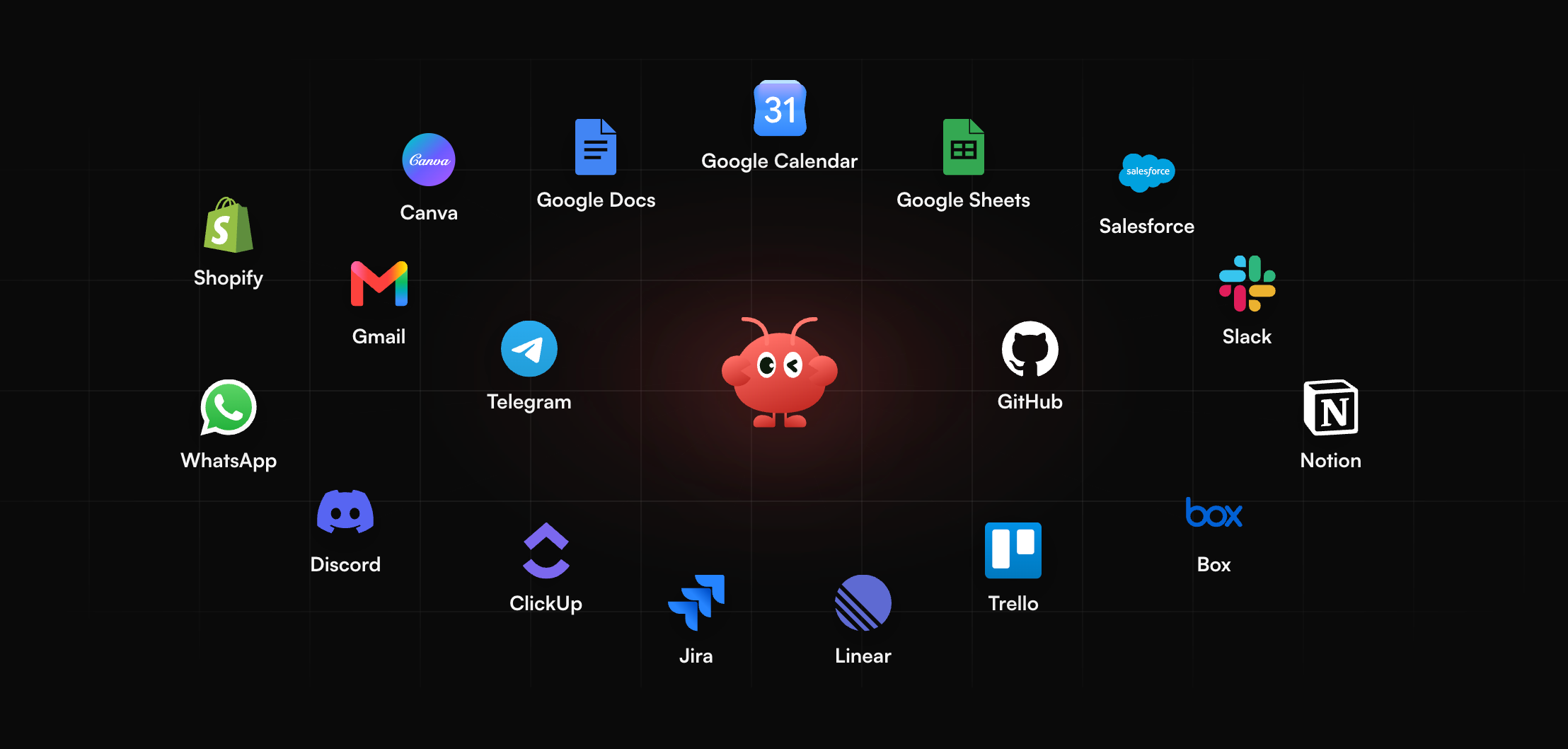
Long agent runs suit a hosted assistant. MyClaw is not a model vendor; it runs an always-available assistant for you, built on your pick of two frameworks, OpenClaw or Hermes Agent, which works with most popular models. Getting going is short:
- Open a MyClaw account.
- Pick the agent framework and the model behind it.
- Connect a messenger and send over a task.
Conclusion: The Kimi K3.1 Pro Review Verdict
Kimi K3.1 Pro is a clear upgrade for K3 users who run agentic coding, with independent results to back the claims and lower list rates. Because it reasons on every call, per-task spend lands near K3's, which makes caching and effort settings the real cost levers. Teams that need self-hosting should wait for the weights, due by Nov 4, 2026.
Put Kimi K3.1 Pro to work on a real task
Start a chat with Kimi K3.1 Pro for coding, writing, or research.
Chat with Kimi K3.1 Pro