DeepSeek V4.1 Flash vs Kimi K3: Price, Context and Open Weights Compared

By Julian Brooks
MyClaw Editorial
MyClaw
Run Best-in-Class AI Agents Now
Run OpenClaw or Hermes Agent on managed MyClaw hosting, so your AI agent stays online, updated, and ready for real work.
AI Takeaway
- Which one is the better default? Pick DeepSeek V4.1 Flash when volume, cost and speed rule. Kimi K3 is Moonshot's flagship with 2.8 trillion parameters, and in our judgment it earns its price on hard, long-running coding and research jobs (neither model was tested by us).
- How far apart are the API prices? Flash (
deepseek-flash) bills $0.30 per million new input tokens and $1.20 for each million it writes at peak, then half that off-peak. Kimi K3 (kimi-k3) lists a flat $3.00 and $15.00. That is roughly 10x on input and 12.5x on output against Flash's peak rates (vendor-stated, checked October 19, 2026). - Do both take images and offer a 1M window? Yes, both list vision and about 1M tokens of context. DeepSeek gives Flash a 384K output cap, but Moonshot's docs we opened give none for K3.
- Are the weights open? Both can be downloaded. DeepSeek publishes Flash under MIT, while K3 ships with Moonshot's own Kimi K3 License, whose terms differ (summary, not legal advice).
- What is the 1017 update? An October 17, 2026 weights-only refresh of Flash with the same API name and prices. DeepSeek reports gains on several agent and reasoning tests (vendor-reported).
The Short Answer: Flash or K3?
Think of it this way: a budget workhorse on one side, a heavyweight on the other. Flash costs far less and can write very long outputs. K3 is a much bigger model with one flat price and Moonshot's strongest published coding and agent scores. Both read images and both take a million tokens, so money, task difficulty and your hosting plans settle it. In other words, the question is less "which is smarter" and more "how much brainpower does this job actually need?"
An earlier matchup of K3 and the older V4 Flash dealt with the 0731 snapshot. This page covers the current snapshot, today's rates and each vendor's latest model page.
| DeepSeek V4.1 Flash | Kimi K3 | |
|---|---|---|
| API name | deepseek-flash | kimi-k3 |
| Listed version | DeepSeek-V4.1-Flash-1017 | No version label listed |
| Context window | 1M | 1,048,576 tokens |
| Output ceiling | 384K | Not stated |
| Vision | Supported | Supported (images and video on the API) |
| Reasoning | Thinking on by default, can be switched off | Always on, three effort levels |
| Input, output (peak or flat) | $0.30, $1.20 | $3.00, $15.00 |
| Weights | MIT License | Kimi K3 License |
Specs at a Glance: Size, Context and Modalities
Kimi K3's Hugging Face card describes a mixture-of-experts design with 104 billion active parameters out of 2.8 trillion in total. It routes each token to 16 of 896 experts, mixes Kimi Delta Attention with gated multi-head latent attention, and was trained with quantization-aware MXFP4 weights. A separate MoonViT-V2 encoder handles pictures, and the context length is 1,048,576 tokens.
We skip a size for Flash because DeepSeek's own pages quote different numbers. DeepSeek's pricing page lists a 1M window, a 384K output cap, vision support and 2,500 concurrent requests.
Both services accept OpenAI-style and Anthropic-style requests, and both offer a Responses API, so switching clients is mostly a matter of changing the base URL and model name. The reasoning switches differ. Flash thinks unless you tell it not to. K3 never stops thinking, and you dial effort to low, high or max (default max).

What Changed in the 1017 Snapshot
DeepSeek introduced V4.1 Flash on September 10, 2026, with native image understanding and a stated focus on speed and throughput. On October 17 it shipped the 1017 weights. The API name and prices stayed put, and the retired Flash names still answer, now served by this model at Flash rates.
DeepSeek reports these gains over the previous weights (vendor-reported, October 2026):
- Terminal-Bench 4.0 rose from 31.2 to 42.3.
- HLE without tools rose from 36.8 to 42.6.
- Outputs became shorter and faster.
What the Update Means for K3 Comparisons
A heads-up: older write-ups pitting K3 against Flash probably describe a snapshot that is gone. To see the new Flash beside its larger sibling, our Flash against Pro guide walks through that pairing.
Kimi K3 Under the Hood
Moonshot positions K3 as its top model for marathon coding sessions and office-style knowledge tasks, with a 1M window and built-in image understanding. Its weights were published by late July 2026.
A few practical details come from Moonshot's own pages. Thinking history has to be passed back to the model on follow-up turns, including its reasoning content and tool calls. Cache writes are billed on a 5-minute or 1-hour tier. Moonshot also posts guides for wiring K3 into coding tools and agent frameworks.
Curious how K3 fares against DeepSeek's bigger model? Read the K3 versus V4 Pro piece.
Token Prices Side by Side
Every rate below is per million tokens, copied on October 19, 2026 from the two official pricing pages.
| Flash peak | Flash off-peak | Kimi K3 | |
|---|---|---|---|
| Uncached input | $0.30 | $0.15 | $3.00 |
| Cached input | $0.006 | $0.003 | $0.30 |
| Output | $1.20 | $0.60 | $15.00 |
DeepSeek counts 1 a.m. to 4 a.m. and 6 a.m. to 10 a.m. UTC on weekdays as peak, except Chinese public holidays. All remaining hours are off-peak. Moonshot's rate is flat with no tiers by context length. K3 also bills cache writes: $3.00 for the 5-minute tier and $6.00 for the 1-hour tier.
Here is our own arithmetic (not a vendor figure). Say a job sends 1M brand-new input tokens and receives 100,000 back, with nothing cached. Flash costs about $0.42 at peak and $0.21 off-peak. K3 costs about $4.50, which is roughly 10.7 times Flash at peak and 21 times off-peak. Thinking tokens are billed as output, so real jobs will cost more on either side, and K3 always thinks.
A Hosted Agent Without the Setup: MyClaw
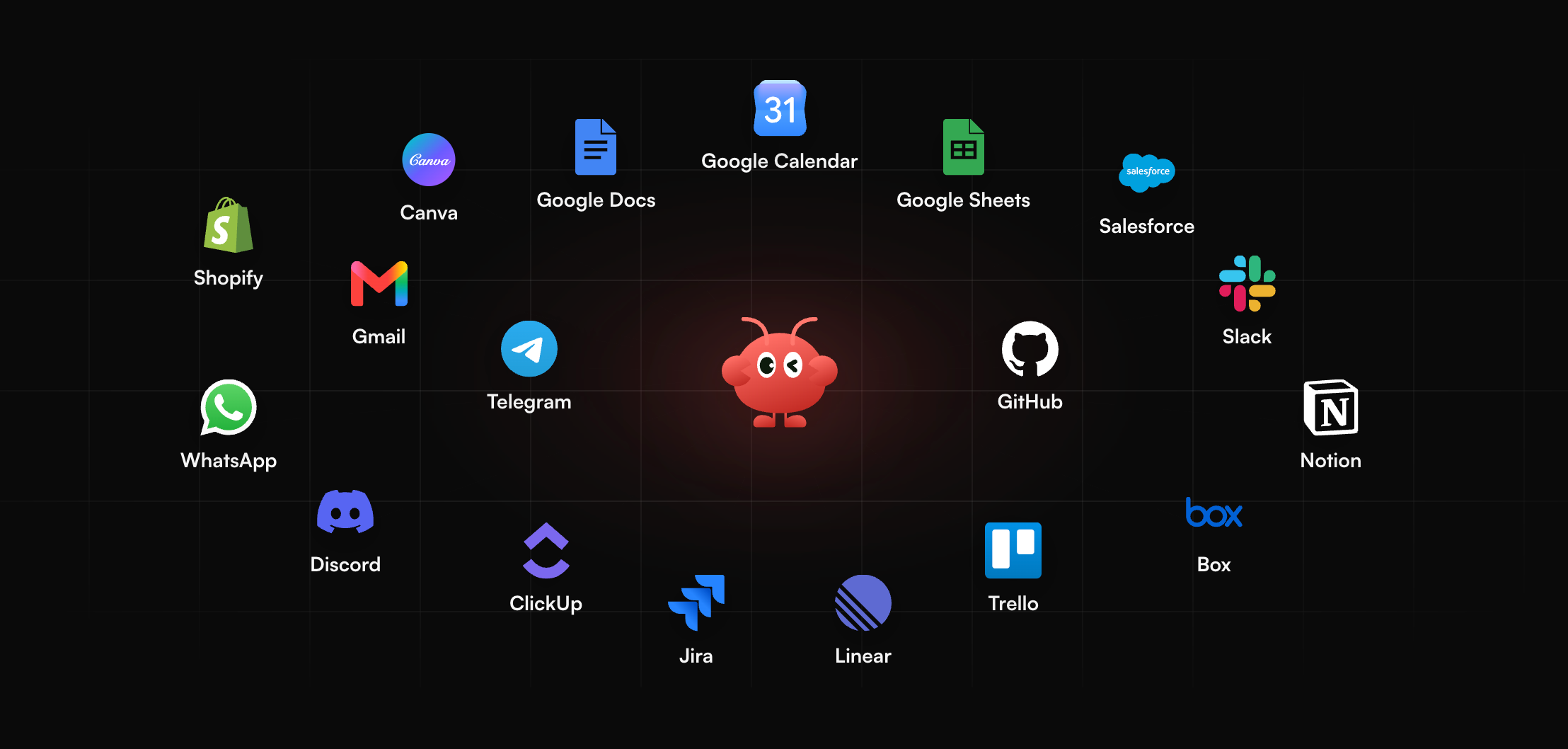
Choosing a model only solves half the puzzle, because something still has to do the work. MyClaw runs a general-purpose agent, either OpenClaw or Hermes, on managed hosting, so it stays awake and replies whenever you ping it. Chat with it through a messenger or your browser, and let it use whatever you plug in.
Plenty of well-known models work on MyClaw, so nothing locks you in. DeepSeek and Kimi models are not something we are saying it runs. Brand new to agents? No worries, begin with this OpenClaw primer or the Hermes agent guide.
- Create your account and launch your hosted agent.
- Pair it with your usual messaging app, then share the files and tools it needs.
- Hand it one small recurring task and see how it does.
Vendor Scores, Read with Care
Each vendor publishes its own numbers, and they were not produced under matching conditions, so we list them separately and draw no winner.
Moonshot's Hugging Face card lists these Kimi K3 results at maximum reasoning effort (vendor-reported, October 2026): Terminal-Bench 2.1 at 88.3, DeepSWE at 67.5 with the Kimi Code harness, BrowseComp at 91.2, GPQA Diamond at 93.5, OSWorld-Verified at 84.8 and 28.3 on Agents' Last Exam.
DeepSeek's September 10 launch table for Flash shows Terminal-Bench 2.1 at 90.6 and 31.8 on Agents' Last Exam (vendor-reported). Those figures predate the 1017 weights.
Putting them side by side would be unfair. Harness, tools, reasoning effort and time limits all differ, and each vendor picks its own rivals. A coding tool from one lab can also lift its own model. The better test is simple: run a handful of your own prompts and note which results needed rework.
Open Weights and Licenses
DeepSeek puts Flash on Hugging Face with an MIT License, one of the most permissive options around. Kimi K3's code and weights carry the Kimi K3 License instead. Moonshot describes commercial use as allowed, with extra terms aimed at very large services. This is a summary, not legal advice, so read the full text before building a product on it.
Size matters for self-hosting too. K3's 2.8 trillion parameters are heavy for most teams to run, even with 4-bit weights (our inference, not a Moonshot statement). For another open model set against K3, see this Meta comparison.
Strengths and Trade-Offs of Flash and K3
Pros of DeepSeek V4.1 Flash
- Much lower list prices, plus half-price quiet hours.
- A 384K output cap and room for 2,500 concurrent requests.
- MIT-licensed weights.
Cons of DeepSeek V4.1 Flash
- Budgeting is trickier with two rate bands.
- Smaller than K3, so very hard tasks may need extra retries.
- The newest gains come from DeepSeek itself.
Pros of Kimi K3
- A very large model with strong vendor-published coding and agent results.
- Flat pricing with no peak hours.
- Reads images and video natively and handles 1M tokens.
Cons of Kimi K3
- Much higher listed token prices, and thinking is always on.
- No output limit appears in the docs we opened.
- A custom license and a very heavy self-hosting load.
Which One to Pick
Choose Flash for bulk jobs, overnight runs and agent loops where cost per task counts. Choose K3 for the hardest repository work, deep research and document or visual tasks where a stronger first pass saves repair time.
You can run both. Send three real tasks to each and compare total cost, rework and how long each takes to deliver.
Conclusion
Flash wins on price, output ceiling and openness under a permissive license. K3 wins on raw scale and on Moonshot's published results for hard agent work. Try both on a few of your own tasks, and count cost and retries before you commit. A quick pilot usually settles it.
Skip the Setup, Run Best-in-Class AI Agents Now
Launch a managed OpenClaw or Hermes Agent workspace in minutes, with always-on hosting, updates, and support handled by MyClaw.